
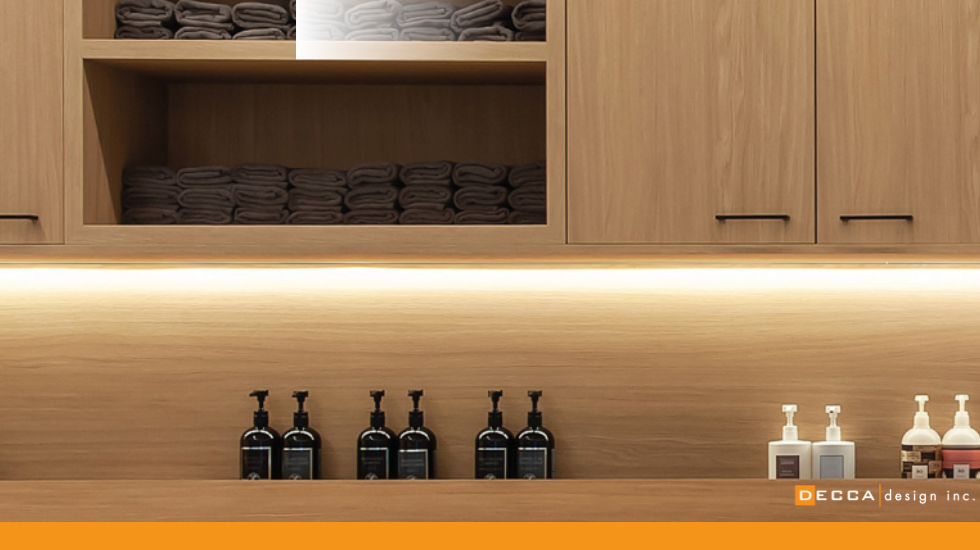
In Olds, Alberta, The Dental Clinic needed to provide good healthcare lighting while still feeling warm and inviting. Decca carefully specified fixtures with the correct colour rendering and illuminance levels, ensuring good visibility without sacrificing design. The final result was a clinic that balanced patient comfort, dental requirements, and a design aesthetic rooted in Alberta’s natural landscape.
In healthcare environments, lighting is about far more than visibility. It sets the tone for patient comfort, influences staff focus, and even supports better clinical outcomes. At Decca Design, we’ve learned that thoughtful lighting design in Alberta clinics isn’t just about brightness. It’s about creating a layered, adaptable, and compliant system that works for every user of the space.
Here are five principles we focus on when designing lighting for medical and dental offices.
1. Balancing Natural and Artificial Light
While Alberta’s abundant daylight can be an asset, uncontrolled natural light can cause glare, heat gain, and inconsistent illumination.
Pro Tip: Use window coverings, UV-filtering films, and strategic room orientation to harness daylight without compromising comfort or visibility.
2. Task Lighting Where It Counts
General overhead lights can’t meet every need in a clinic. Detailed work, from dental procedures to charting, requires focused, shadow-free illumination.
When designing Timberlands Dental Care in Red Deer, precision was everything. With nine operatories arranged around a central sterilization hub, Decca integrated shadow-free task lighting directly into each operatory. This not only improved visibility for detailed procedures but also reduced eye strain for staff working long hours under bright lights.
3. Creating a Calming Patient Experience
Bright, cool-toned lights may be necessary in treatment rooms, but they can feel harsh in waiting areas. Warm, dimmable lighting helps reduce anxiety and makes the space feel more welcoming.
Pro Tip: Layer different light sources (ambient, task, accent) so the lighting can adapt to different times of day and patient needs.
4. Meeting Healthcare Standards and Energy Codes
In Alberta, healthcare lighting must meet both medical and energy efficiency requirements. This means choosing fixtures with the right colour rendering index (CRI), illuminance levels, and energy performance.
5. Planning for Flexibility
Healthcare spaces evolve. Whether adding new equipment, expanding services, or changing room functions, your lighting should be adaptable.
Pro Tip: Include dimmable circuits, modular fixtures, and easily upgradable LED systems
to future-proof your clinic lighting.
Lighting That Works as Hard as You Do
A well-lit clinic supports patient care, reduces staff fatigue, and enhances your professional image. By considering both the functional and emotional aspects of lighting design in healthcare, you create a space that’s as comfortable as it is capable.
At Decca Design, we blend aesthetic vision with technical expertise to craft lighting plans tailored to Alberta’s healthcare environment.
Book your complimentary consultation today and let’s make your clinic shine in all the right ways.
Book your complimentary consultation today and let’s make your clinic shine in all the right ways.